Amethyst Buyers Guide: How to Spot Quality (and Avoid Fakes)
Not all amethyst is equal. Learn how to evaluate colour, clarity, origin, and certification — so you never overpay for heat-treated glass again.
The Problem With Most Amethyst Listings Online
Search "amethyst" on any major marketplace and you'll find stones priced anywhere from $4 to $4,000. The photos look similar. The descriptions say "natural." So why the 1,000x price difference?
The answer comes down to four factors: colour, clarity, origin, and whether the stone has been treated. This guide teaches you to evaluate all four — so you can buy with confidence.
Factor 1: Colour Is Everything
Amethyst's value is almost entirely determined by colour. Specifically, gemologists look for:
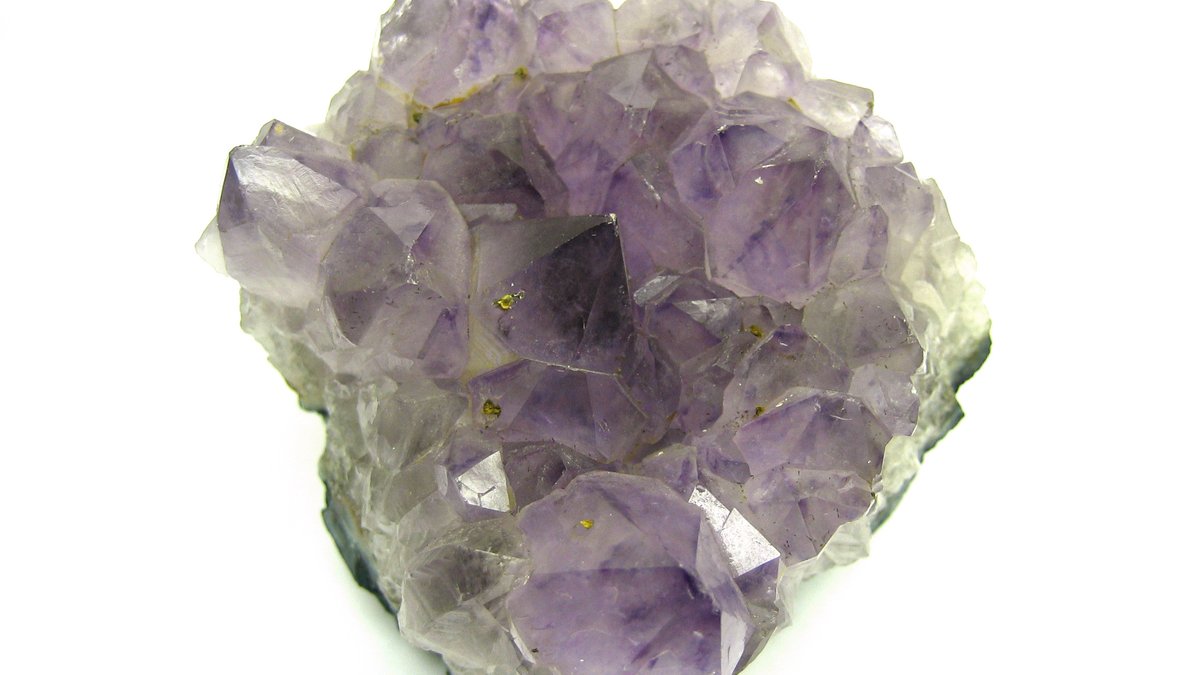
Hue: The ideal amethyst hue is a pure purple, slightly red-purple, or violet-purple. Stones that lean too pink or too blue are less valuable.
Saturation: Deep, intense colour is more valuable than pale or washed-out. The most prized amethyst has a "Siberian" level of saturation — an almost electric violet-purple that holds its colour even in incandescent light.
Tone: Neither too light (pastel) nor too dark (near-black). The sweet spot is a medium to medium-dark tone, roughly 60–80% on a 0–100 scale.
Colour zoning: Amethyst often grows with uneven colour — dark patches and pale zones. High-quality stones have even colour distribution throughout. Zoning is acceptable in raw specimens but is a quality issue in cut stones.
Factor 2: Clarity
Unlike diamonds, amethyst is not graded on a standardised clarity scale. But the principles are similar:
Eye-clean: No visible inclusions when viewed with the naked eye from arm's length. This is the baseline for any gem-quality stone.
Loupe-clean: No inclusions visible under 10× magnification. Rarer and more valuable.
Common inclusions in amethyst include needle-like rutile crystals, liquid feathers, and colour boundaries. A few inclusions don't disqualify a stone — they can even serve as provenance evidence — but heavy inclusions affect brilliance.
Factor 3: Origin Matters
Where an amethyst comes from affects both its colour and its market value:
| Origin | Characteristics | Value |
|---|---|---|
| Siberia | Historically the benchmark — deep violet with red flash | Highest (if genuine) |
| Uruguay | Deep violet, excellent saturation, fine crystal habit | Very high |
| Brazil | Wide range — from pale to deep; most of the world supply | Variable |
| Zambia | Darker, slightly more reddish-purple; excellent saturation | High |
| India | Often lighter, more lavender; lower value | Lower |
Important: "Siberian amethyst" today usually refers to colour, not origin — true Siberian deposits are largely exhausted. A seller claiming Siberian origin for a $50 stone is selling you marketing, not geography.
Factor 4: Heat Treatment and Fakes
Heat Treatment
Most amethyst on the market has been heat-treated. When heated to 400–500°C, amethyst turns yellow-to-orange — producing what's sold as "citrine" (much of the citrine on the market is actually heat-treated amethyst). Heating amethyst at lower temperatures can lighten or even improve pale stones.
Heat treatment is generally accepted in the gemstone trade and doesn't necessarily reduce value if disclosed. The problem is when it's used to turn low-grade pale amethyst into something that looks deeper — and isn't disclosed.
Signs of heat treatment:
- Unusually uniform colour without any zoning
- Slightly brownish-orange tint in intense light (a side effect of overheating)
- Price significantly below market for apparent quality
Synthetic and Glass "Amethyst"
Glass fakes are identifiable with a loupe — glass has gas bubbles and lacks the internal crystal structure of genuine quartz. Synthetic (lab-grown) amethyst is physically identical to natural but typically has a "too perfect" quality — zero inclusions, flawless colour zoning.
A simple test: real amethyst stays cool to the touch longer than glass (it's a poor thermal conductor). It also scratches glass (Mohs 7) but glass won't scratch it.
What to Ask Before Buying
Before purchasing any amethyst over $500 CAD, ask for:
- Certificate of authenticity from a recognised lab (GIA, AGL, Gübelin, SSEF). For stones over $2,000, insist on it.
- Origin statement — Brazil, Uruguay, or Zambia are all honest answers. "Natural" without an origin is a yellow flag.
- Treatment disclosure — specifically, has the stone been heated? Reputable sellers disclose this.
- Return policy — any reputable dealer offers at least 14 days for certified stones.
What You Get at iLoadStar
Every loose gemstone we sell over $500 CAD comes with a certificate from an accredited gemological laboratory. We disclose origin, treatment history, and carat weight upfront — no surprises.
Browse our certified amethyst collection — or if you're just starting out, our Beginner Crystal Kit is a no-pressure way to explore amethyst and six other essential stones.